
EV Directory > Toyota Portfolio
Toyota EV Portfolio
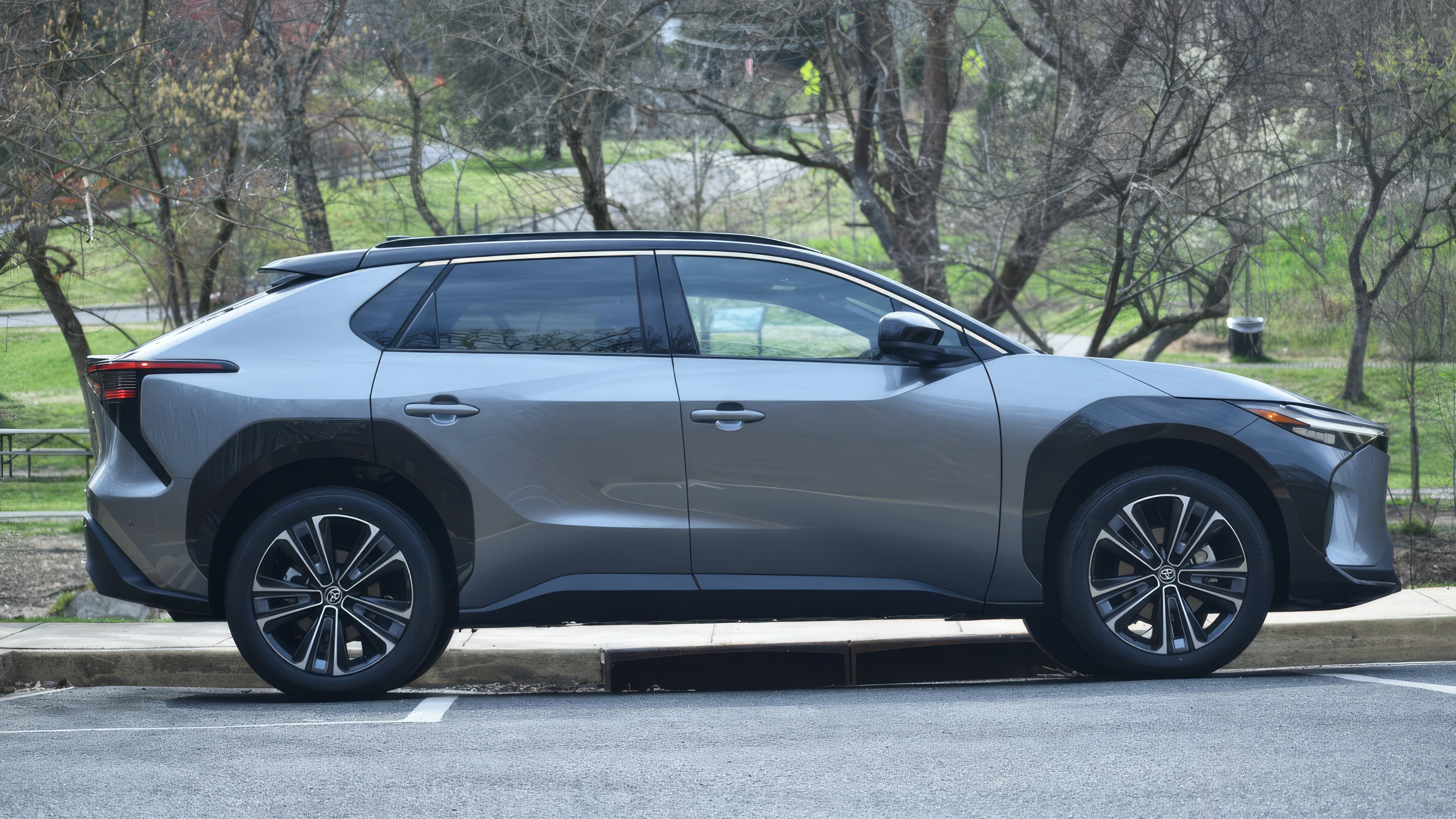
Toyota is an EV brand owned by Toyota Motor and made in Japan. This model portfolio showcases the shift toward zero-emission mobility.
Vehicles are organized by model family. A model family is an OEM-defined product program sharing a common platform, architecture, and market positioning, from which multiple body styles, variants, and trims are derived.
Toyota EV Model Families
List of Toyota EV model families - only all-electric (BEV) models are listed:
| Canonical Model | Variants | Style |
|---|---|---|
| Toyota bZ2X | SUV | |
| Toyota bZ3 | 50 kWh | sedan |
| Toyota bZ3 | 65 kWh | sedan |
| Toyota bZ4X | AWD | SUV |
| Toyota bZ4X | Robotaxi | SUV |
| Toyota bZ4X | SUV | |
| Toyota bZ5X | AWD | SUV |
| Toyota C-HR+ | SUV | |
| Toyota Hilux | Revo BEV | pickup |
| Toyota Hilux | Revo BEV | pickup |
| Toyota Proace | 50 kWh | MPV |
| Toyota Proace | 75 kWh | MPV |
| Toyota Tacoma Electric | pickup | |
| Toyota Urban Cruiser | AWD | SUV |
| Toyota Urban Cruiser | SUV |
Toyota EV Technology
Platform: Dedicated EV, 400VE/E Architecture: Modern
OTA Capability: Baseline
Battery Suppliers: CATL, Panasonic
Power Inverter Tech: SiC-based
Platform = level of vehicle platform maturity or advancement, and its dominant system voltage.
Shared = ICE-derived | Dedicated = EV-native platform | SDV-Native = future-proof
E/E Architecture: degree of integration and maturity of the vehicle’s electronic/electric control systems (from Baseline legacy wiring to Advanced domain/zonal designs).
Baseline = Distributed ECUs | Modern = Domain-based | SDV-Native = Zonal-based with central compute
OTA Capability = scope of Over-The-Air updates supported — from Baseline basic infotainment to Advanced control and systems firmware.
Baseline = Infotainment/maps | Limited = Infotainment+ | Partial = Multiple systems | Advanced = Most systems | Full = Full-vehicle updateable
Battery Suppliers = primary traction battery suppliers across the model lineup.
Power Inverter Tech = power electronics technology used (silicon carbide SiC vs silicon), which affects efficiency and thermal performance.
IGBT = Conventional | SiC = High-efficiency | GaN = Next-generation, pilots
Toyota electric pickup trucks
| Model |
|---|
| Toyota Tacoma Electric | Hilux |
Toyota electric vans & MPVs
| Model |
|---|
| Toyota Proace Icon | Sport Electric |
About Toyota
Toyota Motor Corporation is one of the world's largest and most influential automakers, headquartered in Toyota City, Japan. Long recognized for its leadership in hybrid technology, manufacturing excellence, and long-term vision, Toyota is now entering a new phase centered on full electrification and digital mobility. The company's approach to electrification is measured yet comprehensive—balancing battery-electric vehicles (BEVs), hybrids (HEVs), plug-in hybrids (PHEVs), and hydrogen fuel-cell vehicles (FCEVs)—to meet diverse regional energy realities and customer needs. This "multi-pathway" strategy reflects Toyota's belief that the transition to zero emissions will unfold differently across global markets.
Toyota's EV efforts are anchored in its bZ ("beyond Zero") sub-brand, which represents the company's next-generation lineup of dedicated battery-electric vehicles. The first production model, the bZ4X, shares the e-TNGA platform co-developed with Subaru and introduces Toyota's modular electric chassis designed for flexibility across multiple body types and drive configurations. Future bZ models—including sedans, crossovers, and MPVs—will use Toyota's next-generation solid-state battery technology, which promises faster charging, longer range, and improved durability. The company has announced plans for a global BEV lineup exceeding 10 models by the late 2020s, backed by aggressive investment in battery R&D and manufacturing.
At the core of Toyota's EV expansion is its commitment to vertical integration and manufacturing innovation. The company is developing large-scale battery production through partnerships such as Prime Planet Energy & Solutions (a joint venture with Panasonic) and has invested heavily in solid-state chemistry research. Toyota's modular EV platform architecture supports scalable vehicle design, shared components, and streamlined assembly processes across its global network. In parallel, Toyota is exploring next-generation manufacturing technologies—including gigacasting, digital twins, and carbon-neutral supply chains—to enhance efficiency and sustainability in its factories.
Toyota's electrification strategy extends beyond vehicles to encompass a broader ecosystem of mobility services and energy solutions. Through initiatives like Toyota Smart City in Woven City, Japan, the company is integrating autonomous vehicles, smart homes, renewable energy, and AI-driven logistics into a connected urban environment. Hydrogen also remains a strategic pillar, with the Mirai FCEV and hydrogen ICE (internal combustion engine) development programs forming part of Toyota's long-term carbon-neutral vision. Globally, Toyota continues to balance innovation with dependability—building toward an electric future rooted in the same principles that have defined its legacy: quality, safety, and continuous improvement.
