
Tata emblem


EV Directory > Tata Portfolio


Tata EV Portfolio
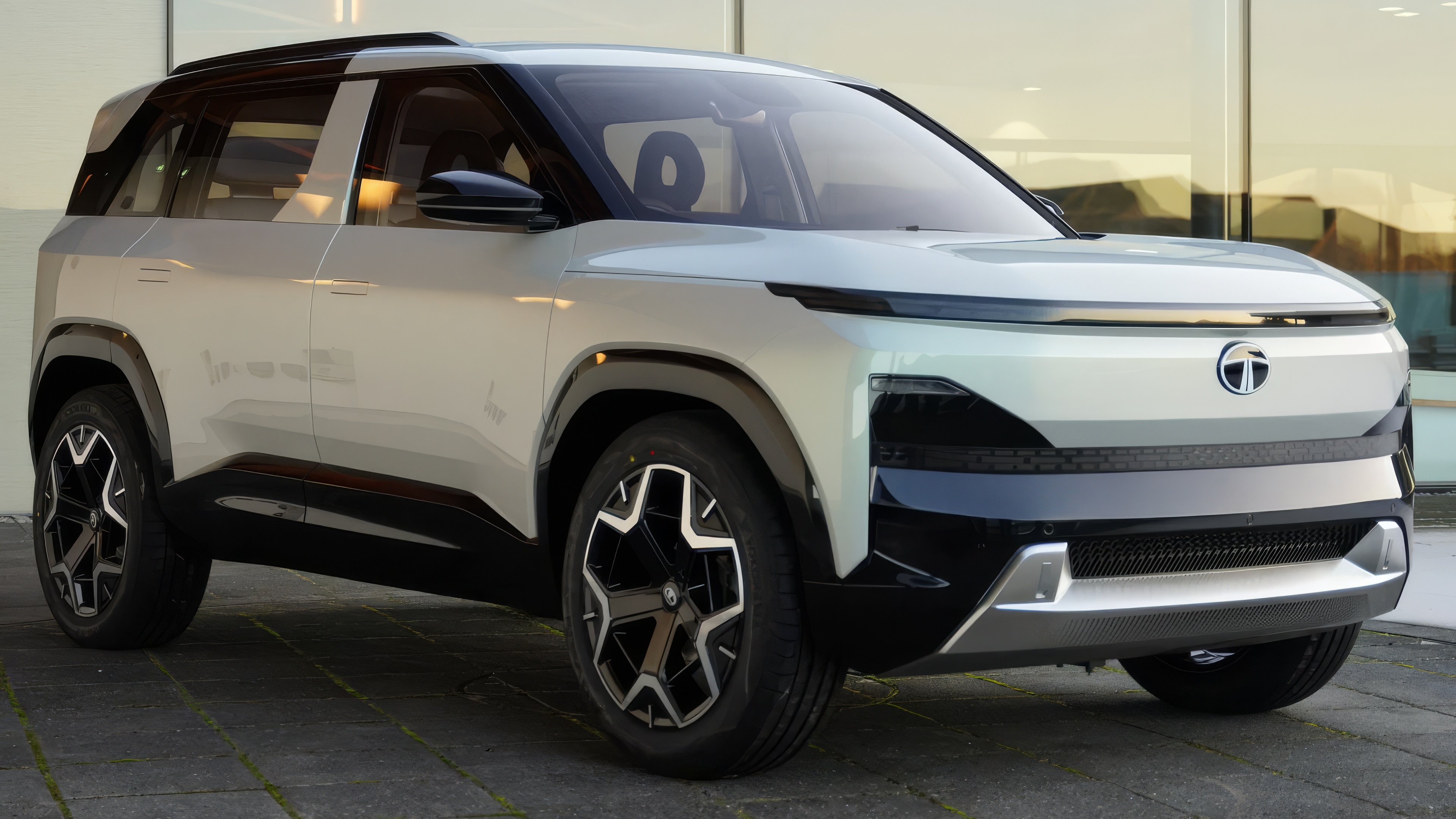

Tata brand EVs

Tata is an EV brand owned by Tata Motors and made in India. This model portfolio showcases the shift toward zero-emission mobility.

Vehicles are organized by model family. A model family is an OEM-defined product program sharing a common platform, architecture, and market positioning, from which multiple body styles, variants, and trims are derived.


Tata EV Model Families

List of Tata EV model families - only all-electric (BEV) models are listed:

Canonical Model Variants Style
Tata Avinya.ev Crossover SUV
Tata Avinya.ev MPV SUV
Tata Avinya.ev Sedan SUV
Tata Curvv.ev AWD SUV
Tata Curvv.ev SUV
Tata Harrier.ev SUV
Tata Nexon.ev LR SUV
Tata Nexon.ev MR SUV
Tata Punch.ev LR SUV
Tata Punch.ev SUV
Tata Sierra.ev AWD SUV
Tata Sierra.ev SUV
Tata Tiago EV LR hatchback
Tata Tiago EV SR hatchback
Tata Tigor EV sedan


Tata EV Technology

Platform: Dedicated EV, 400V
E/E Architecture: Baseline
OTA Capability: Baseline
Battery Suppliers: LG Chem, Tata
Power Inverter Tech: IGBT-based

Platform = level of vehicle platform maturity or advancement, and its dominant system voltage.
Shared = ICE-derived | Dedicated = EV-native platform | SDV-Native = future-proof

E/E Architecture: degree of integration and maturity of the vehicle’s electronic/electric control systems (from Baseline legacy wiring to Advanced domain/zonal designs).
Baseline = Distributed ECUs | Modern = Domain-based | SDV-Native = Zonal-based with central compute

OTA Capability = scope of Over-The-Air updates supported — from Baseline basic infotainment to Advanced control and systems firmware.
Baseline = Infotainment/maps | Limited = Infotainment+ | Partial = Multiple systems | Advanced = Most systems | Full = Full-vehicle updateable

Battery Suppliers = primary traction battery suppliers across the model lineup.

Power Inverter Tech = power electronics technology used (silicon carbide SiC vs silicon), which affects efficiency and thermal performance.
IGBT = Conventional | SiC = High-efficiency | GaN = Next-generation, pilots


About Tata

Tata Motors is one of India's largest and most respected automotive manufacturers, headquartered in Mumbai and part of the Tata Group, a global industrial conglomerate with interests spanning steel, energy, technology, and telecommunications. Established in 1945, Tata Motors has long been a cornerstone of India's industrial development, producing a wide range of vehicles including passenger cars, commercial trucks, and defense vehicles. In recent years, the company has taken a leading role in driving India's transition toward electric mobility, aligning its strategy with the government's National Electric Mobility Mission and the broader goal of achieving net zero emissions by 2070.

Tata Motors entered the EV market with the Nexon EV, a compact SUV that became India's best selling electric vehicle thanks to its affordability, practicality, and familiarity to Indian consumers. Built on the Ziptron electric powertrain platform, the Nexon EV combines robust performance, efficient energy management, and fast charging capability within a body design suited for India's varied road conditions. It was followed by the Tigor EV and the Tiago EV, expanding the company's electric portfolio into sedan and hatchback categories. The Nexon EV Max and the Punch EV further demonstrate Tata's ability to offer improved range, safety, and technology while keeping prices accessible for mass market adoption.

The company's electric strategy is supported by Tata Passenger Electric Mobility (TPEM), a dedicated EV subsidiary established to accelerate the development of new platforms, battery systems, and software ecosystems. TPEM is building the next generation of electric vehicles on Tata's advanced Gen 3 architecture, designed for longer range, faster charging, and integration of connected features and ADAS (advanced driver assistance systems). Tata is also investing heavily in localized battery and component manufacturing through Tata Agratas, its battery cell joint venture, which aims to build large scale gigafactories in India and the United Kingdom to secure sustainable supply chains.

Tata Motors is unique in its holistic approach to electrification, leveraging synergies across the Tata Group ecosystem. Tata Power operates one of India's largest EV charging networks, Tata Chemicals develops battery materials and recycling processes, and Tata Elxsi provides embedded software and simulation systems. Together, these entities form an end to end electric mobility value chain encompassing energy, manufacturing, and digital integration. By combining its domestic leadership, manufacturing scale, and sustainable energy partnerships, Tata Motors is positioning itself as the central force in India's electric vehicle transformation, bringing clean and connected mobility to millions of drivers across emerging markets.