Porsche emblem


EV Directory > Porsche Portfolio


Porsche EV Portfolio
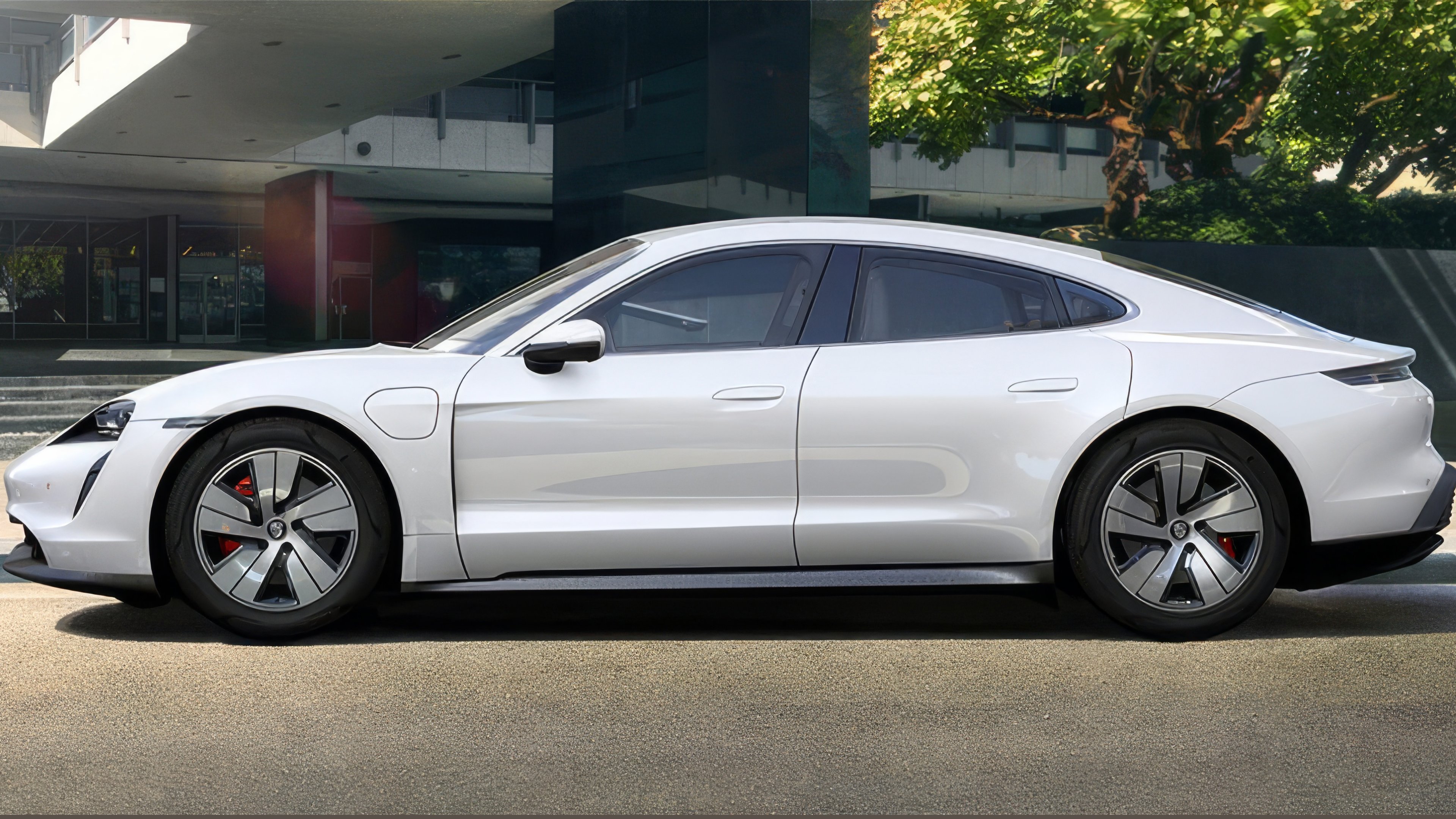

Porsche brand EVs

Porsche is an EV brand owned by Volkswagen Group and made in Germany. This model portfolio showcases the shift toward zero-emission mobility.

Vehicles are organized by model family. A model family is an OEM-defined product program sharing a common platform, architecture, and market positioning, from which multiple body styles, variants, and trims are derived.


Porsche EV Model Families

List of Porsche EV model families - only all-electric (BEV) models are listed:

Canonical Model Variants Style
Porsche 718 Boxster EV Roadster convertible
Porsche 718 Cayman EV coupe
Porsche Cayenne Coupe | SUV SUV
Porsche Macan SUV
Porsche Mission X coupe
Porsche Taycan Sedan | Sport Turismo | Cross Turismo | Turbo GT wagon


Porsche EV Technology

Platform: SDV-Native, 800V
E/E Architecture: Modern
OTA Capability: Baseline
Battery Suppliers: CATL, LG, SK On
Power Inverter Tech: SiC-based

Platform = level of vehicle platform maturity or advancement, and its dominant system voltage.
Shared = ICE-derived | Dedicated = EV-native platform | SDV-Native = future-proof

E/E Architecture: degree of integration and maturity of the vehicle’s electronic/electric control systems (from Baseline legacy wiring to Advanced domain/zonal designs).
Baseline = Distributed ECUs | Modern = Domain-based | SDV-Native = Zonal-based with central compute

OTA Capability = scope of Over-The-Air updates supported — from Baseline basic infotainment to Advanced control and systems firmware.
Baseline = Infotainment/maps | Limited = Infotainment+ | Partial = Multiple systems | Advanced = Most systems | Full = Full-vehicle updateable

Battery Suppliers = primary traction battery suppliers across the model lineup.

Power Inverter Tech = power electronics technology used (silicon carbide SiC vs silicon), which affects efficiency and thermal performance.
IGBT = Conventional | SiC = High-efficiency | GaN = Next-generation, pilots


About Porsche

Porsche AG is a German performance and luxury automobile manufacturer headquartered in Stuttgart, and part of the Volkswagen Group. Founded in 1931 by Ferdinand Porsche, the brand is synonymous with engineering precision, motorsport heritage, and timeless design. In recent years, Porsche has emerged as one of the most successful legacy automakers in the transition to electrification, leveraging its deep performance expertise to redefine what electric driving can feel like.

Porsche's electric transformation began with the Taycan, introduced in 2019 as its first fully electric sports sedan. Built on the dedicated J1 Performance Platform co-developed with Audi, the Taycan set new industry benchmarks for power delivery, build quality, and handling precision. It features an 800-volt electrical system enabling ultra-fast 270 kW DC charging, with models ranging from the base Taycan to the Taycan Turbo S delivering up to 560 kW (750 hp) and 0-100 km/h acceleration in just 2.8 seconds. The Taycan's performance consistency under repeated acceleration runs and track use has helped establish it as the benchmark among high-performance EVs.

The Taycan lineup has since expanded to include Sport Turismo and Cross Turismo variants, combining wagon practicality with the same athletic dynamics. The model family remains one of Porsche's best-selling vehicles worldwide, with strong adoption across both performance and luxury markets.

Porsche's second all-electric model, the Macan Electric, launched in 2024 on the new PPE (Premium Platform Electric) architecture, developed jointly with Audi. The Macan EV features dual-motor all-wheel drive, 800-volt charging capability, and up to 630 kilometers of WLTP range. It introduces Porsche's next-generation digital cockpit, a new head-up display with augmented reality, and improved thermal management for sustained high-performance driving. The PPE platform will underpin several future EVs across the Volkswagen Group, positioning Porsche as a technical leader in modular EV architectures.

Beyond its current BEV lineup, Porsche has confirmed several upcoming electric models, including the next-generation 718 Cayman and Boxster, which will be fully electric and built on a bespoke lightweight EV platform. The next Cayenne is also slated for full electrification later in the decade, followed by a new flagship electric SUV positioned above the Cayenne, offering long-range touring and advanced driver assistance capabilities. These models will anchor Porsche's strategy to achieve 80% of global sales from fully electric vehicles by 2030.

Porsche continues to invest heavily in energy infrastructure and battery innovation. It co-owns the Cellforce Group, developing high-performance silicon-anode batteries for next-generation vehicles, and partners with Ionity to expand Europe's 800-volt ultra-fast charging network. The company is also exploring synthetic eFuels at its Haru Oni plant in Chile to decarbonize combustion models during the transition period.

Despite the shift to electric, Porsche remains dedicated to its core values- driver engagement, design purity, and engineering excellence. Every electric Porsche is developed to deliver the same tactile precision, weight balance, and emotional connection as its combustion counterparts, ensuring the brand's DNA remains intact in the zero-emission era.

Electrification Status

Porsche is a transitioning automaker at the forefront of high-performance electrification. With the Taycan and Macan EV leading its lineup- and fully electric 718 and Cayenne models on the horizon- Porsche combines its racing pedigree with next-generation technology to define the future of performance motoring in an electric world.