
EV Directory > Opel Portfolio
Opel EV Portfolio
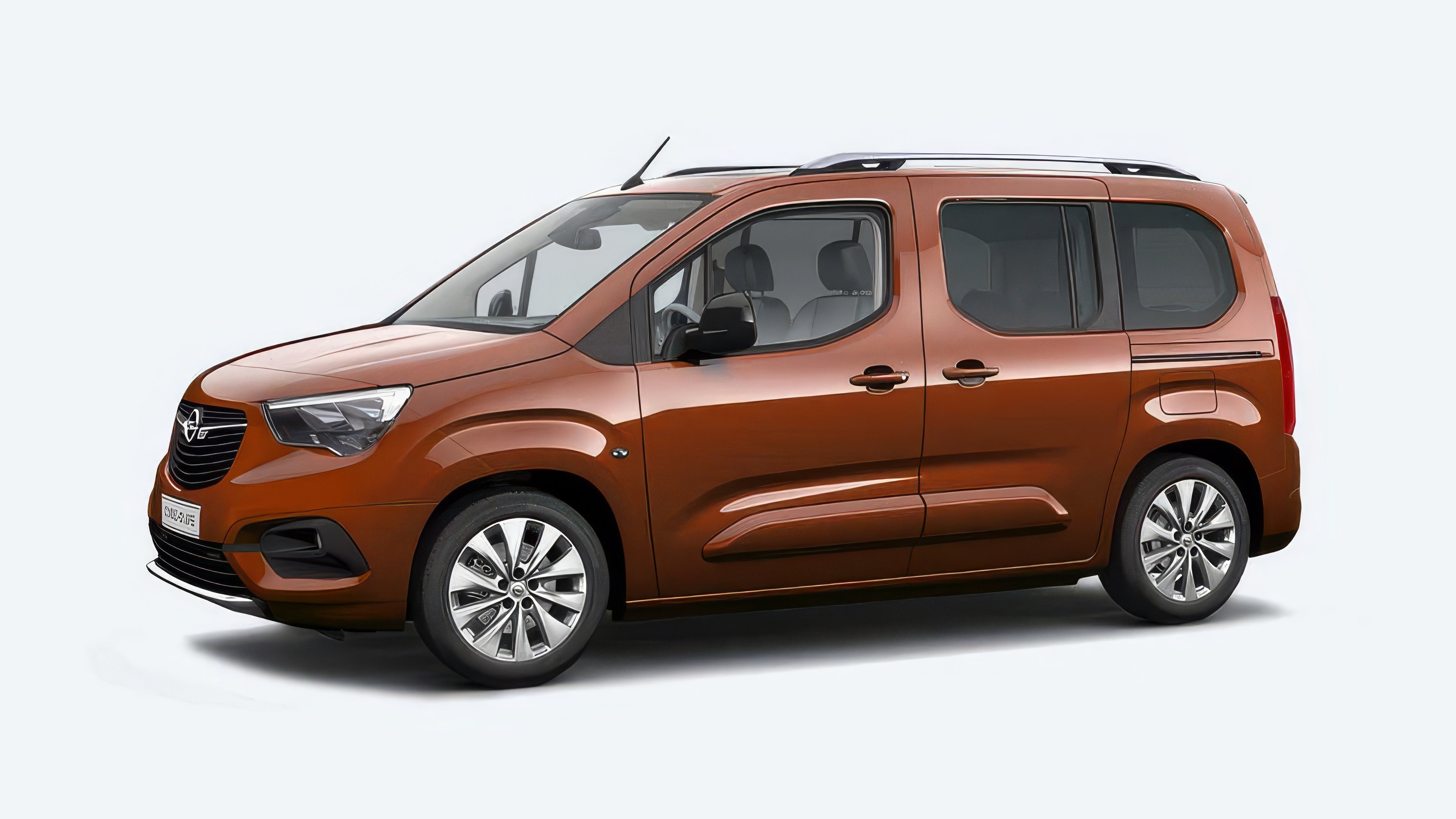
Opel is an EV brand owned by Stellantis and made in Germany. This model portfolio showcases the shift toward zero-emission mobility.
Vehicles are organized by model family. A model family is an OEM-defined product program sharing a common platform, architecture, and market positioning, from which multiple body styles, variants, and trims are derived.
Opel EV Model Families
List of Opel EV model families - only all-electric (BEV) models are listed:
| Canonical Model | Variants | Style |
|---|---|---|
| Opel Astra Electric | Sports Tourer | hatchback |
| Opel Astra Electric | hatchback | |
| Opel Combo Electric | Cargo | van |
| Opel Combo Electric | Life | SUV |
| Opel Combo Electric | Life XL | MPV |
| Opel Corsa Electric | hatchback | |
| Opel Fronterra Electric | SUV | |
| Opel Grandland Electric | LR | SUV |
| Opel Grandland Electric | SUV | |
| Opel Mokka Electric | SUV | |
| Opel Zafira Electric | Cargo | MPV |
| Opel Zafira Electric | L | MPV |
| Opel Zafira Electric | M | MPV |
| Opel Zafira Electric | XL | MPV |
Opel EV Technology
Platform: Shared, 400V-dominantE/E Architecture: Modern
OTA Capability: Baseline
Battery Suppliers: CATL, Samsung
Power Inverter Tech: IGBT-based
Platform = level of vehicle platform maturity or advancement, and its dominant system voltage.
Shared = ICE-derived | Dedicated = EV-native platform | SDV-Native = future-proof
E/E Architecture: degree of integration and maturity of the vehicle’s electronic/electric control systems (from Baseline legacy wiring to Advanced domain/zonal designs).
Baseline = Distributed ECUs | Modern = Domain-based | SDV-Native = Zonal-based with central compute
OTA Capability = scope of Over-The-Air updates supported — from Baseline basic infotainment to Advanced control and systems firmware.
Baseline = Infotainment/maps | Limited = Infotainment+ | Partial = Multiple systems | Advanced = Most systems | Full = Full-vehicle updateable
Battery Suppliers = primary traction battery suppliers across the model lineup.
Power Inverter Tech = power electronics technology used (silicon carbide SiC vs silicon), which affects efficiency and thermal performance.
IGBT = Conventional | SiC = High-efficiency | GaN = Next-generation, pilots
Opel electric vans & MPVs
| Model |
|---|
| Opel Combo-e | Movano-e | Vivaro-e |
About Opel
Opel Automobile GmbH is a German automaker headquartered in Rüsselsheim am Main and a core brand of the Stellantis Group. Founded in 1862, Opel has evolved from its origins in sewing machines and bicycles to become one of Europe's most recognized automotive manufacturers. Today, Opel is undergoing a full-scale transformation toward electrification, with a clear commitment to become a 100% electric brand in Europe by 2028. Its UK counterpart, Vauxhall, follows the same strategy under shared product architectures and powertrains.
Opel's modern electrification strategy began with the introduction of the Ampera in 2011- a plug-in hybrid version of the Chevrolet Volt- followed by the brand's first dedicated BEV, the Corsa-e, launched in 2019. Built on Stellantis's eCMP platform, the Corsa-e features a 50 kWh battery and up to 360 kilometers of WLTP range, offering spirited urban performance in a compact form factor. It was quickly followed by the Mokka-e, a small electric SUV that combines bold styling with a 54 kWh battery and similar range, becoming one of Opel's most popular EVs.
Opel has since expanded its BEV portfolio across multiple segments. The lineup now includes the Astra Electric (hatchback and Sports Tourer), Combo-e Life (MPV), Vivaro-e (light commercial van), and Zafira-e Life (large MPV). These models are built on Stellantis's modular eCMP and EMP2 architectures, ensuring shared battery systems, drivetrains, and software integration across the group. Opel's latest generation of electric models will transition to Stellantis's next-generation STLA Small, STLA Medium, and STLA Large platforms, enabling longer range (up to 700 km), faster charging, and enhanced software-defined functionality.
Design has become central to Opel's new identity, led by the Opel Vizor- a unified front fascia integrating LED lighting and radar sensors into a clean, aerodynamic surface. Interiors feature the minimalist Pure Panel cockpit design, combining digital displays with intuitive physical controls for clarity and comfort. These design cues carry across all new EVs, establishing a cohesive brand language centered on German precision and practical innovation.
Opel's electrification push extends beyond passenger cars to commercial vehicles, where it leads within Stellantis's Pro One LCV division. Electric versions of the Combo, Vivaro, and Movano vans are already in production, providing sustainable solutions for urban logistics, fleets, and last-mile delivery.
As part of Stellantis's broader sustainability roadmap, Opel is also preparing for the introduction of next-generation solid-state batteries and over-the-air (OTA) enabled vehicle architectures. By 2028, all new Opel models sold in Europe will be battery electric, with plug-in hybrids and combustion powertrains phased out entirely.
Electrification Status
Opel is a transitioning automaker in the advanced stages of electrification. With fully electric models like the Corsa-e, Mokka-e, and Astra Electric already on the market- and a complete BEV portfolio targeted for 2028- Opel is uniting German design, efficiency, and technology to redefine accessible zero-emission mobility across Europe.
