EV Directory > Kia Portfolio
Kia EV Portfolio
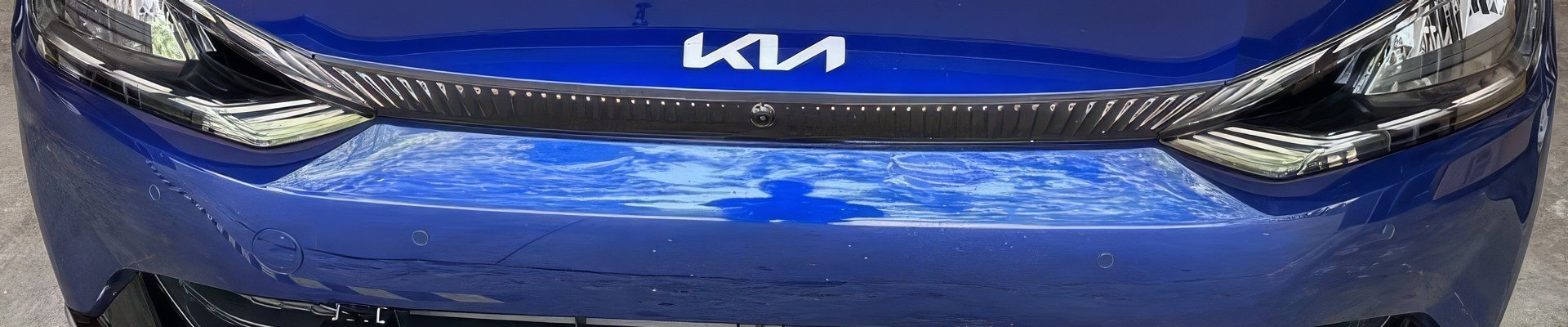
Kia is an EV brand owned by Hyundai Group and made in South Korea. This model portfolio showcases the shift toward zero-emission mobility.
Vehicles are organized by model family. A model family is an OEM-defined product program sharing a common platform, architecture, and market positioning, from which multiple body styles, variants, and trims are derived.
Kia EV Model Families
List of Kia EV model families - only all-electric (BEV) models are listed:
| Canonical Model | Variants | Style |
|---|---|---|
| Kia EV2 | hatchback | |
| Kia EV3 | SUV | |
| Kia EV4 | hatchback | |
| Kia EV5 | SUV | |
| Kia EV6 | SUV | |
| Kia EV8 | SUV | |
| Kia EV9 | SUV | |
| Kia Niro EV | SUV | |
| Kia PV1 | van | |
| Kia PV5 | Robotaxi | MPV |
| Kia PV5 | MPV | |
| Kia PV7 | van | |
| Kia Ray EV | SUV |
Kia EV Technology
Platform: Shared, 800V-dominantE/E Architecture: Modern
OTA Capability: Partial
Battery Suppliers: CATL, LG, SK On
Power Inverter Tech: SiC-based
Platform = level of vehicle platform maturity or advancement, and its dominant system voltage.
Shared = ICE-derived | Dedicated = EV-native platform | SDV-Native = future-proof
E/E Architecture: degree of integration and maturity of the vehicle’s electronic/electric control systems (from Baseline legacy wiring to Advanced domain/zonal designs).
Baseline = Distributed ECUs | Modern = Domain-based | SDV-Native = Zonal-based with central compute
OTA Capability = scope of Over-The-Air updates supported — from Baseline basic infotainment to Advanced control and systems firmware.
Baseline = Infotainment/maps | Limited = Infotainment+ | Partial = Multiple systems | Advanced = Most systems | Full = Full-vehicle updateable
Battery Suppliers = primary traction battery suppliers across the model lineup.
Power Inverter Tech = power electronics technology used (silicon carbide SiC vs silicon), which affects efficiency and thermal performance.
IGBT = Conventional | SiC = High-efficiency | GaN = Next-generation, pilots
About Kia
Kia Corporation is a South Korean automaker headquartered in Seoul and a core subsidiary of the Hyundai Motor Group. Founded in 1944 as a manufacturer of bicycles and steel tubing, Kia has grown into one of the world's largest vehicle producers, known for its design innovation, reliability, and value. In recent years, Kia has undergone a major transformation toward electrification and sustainable mobility, rebranding in 2021 with the slogan "Movement That Inspires."
Kia's electrification roadmap is anchored by its dedicated EV lineup, which debuted with the EV6 in 2021. Built on Hyundai Motor Group's E-GMP (Electric Global Modular Platform), the EV6 introduced ultra-fast 800-volt charging, vehicle-to-load (V2L) power export, and up to 528 kilometers of range (WLTP). Its performance variant, the EV6 GT, delivers supercar-level acceleration with dual motors producing 430 kW. Following its success, Kia has expanded its lineup with the EV9, a full-size three-row electric SUV launched in 2023, featuring advanced driver assistance, over-the-air updates, and modular battery options. The EV5 compact SUV and EV3 subcompact crossover follow as global models aimed at mass-market electrification.
Kia's design philosophy, "Opposites United," guides the brand's visual and technological direction, blending futuristic styling with intuitive functionality. Its interiors emphasize sustainability through the use of recycled plastics, biobased materials, and digital interfaces designed for personalization. The brand also plans to introduce up to 15 all-electric models globally by 2027, covering passenger cars, SUVs, and commercial vehicles.
Beyond consumer EVs, Kia is investing heavily in next-generation mobility, including PBVs (Purpose-Built Vehicles) and autonomous technologies. The upcoming Kia PBV Platform will support modular electric vans and shuttles optimized for logistics, ride-hailing, and delivery applications. Kia is also collaborating with Hyundai and Motional on robotaxi programs based on the IONIQ 5 and similar architectures, positioning the brand within the broader ecosystem of intelligent, connected mobility.
Kia manufactures its EVs across global facilities in South Korea, China, and North America, with the U.S. plant in Georgia slated to produce the EV9 and EV5 for regional markets. The brand is also investing in battery partnerships and recycling initiatives as part of its Plan S strategy, which targets carbon neutrality by 2045.
Pure Electric Identity
Kia is rapidly evolving into a near pure-play electric automaker, developing an expanding family of dedicated EVs under the E-GMP platform while phasing out combustion models in key markets. With its balance of innovation, sustainability, and affordability, Kia has become one of the most competitive and globally recognized brands driving the mainstream adoption of electric mobility.
