
EV Directory > KGM Portfolio
KGM EV Portfolio
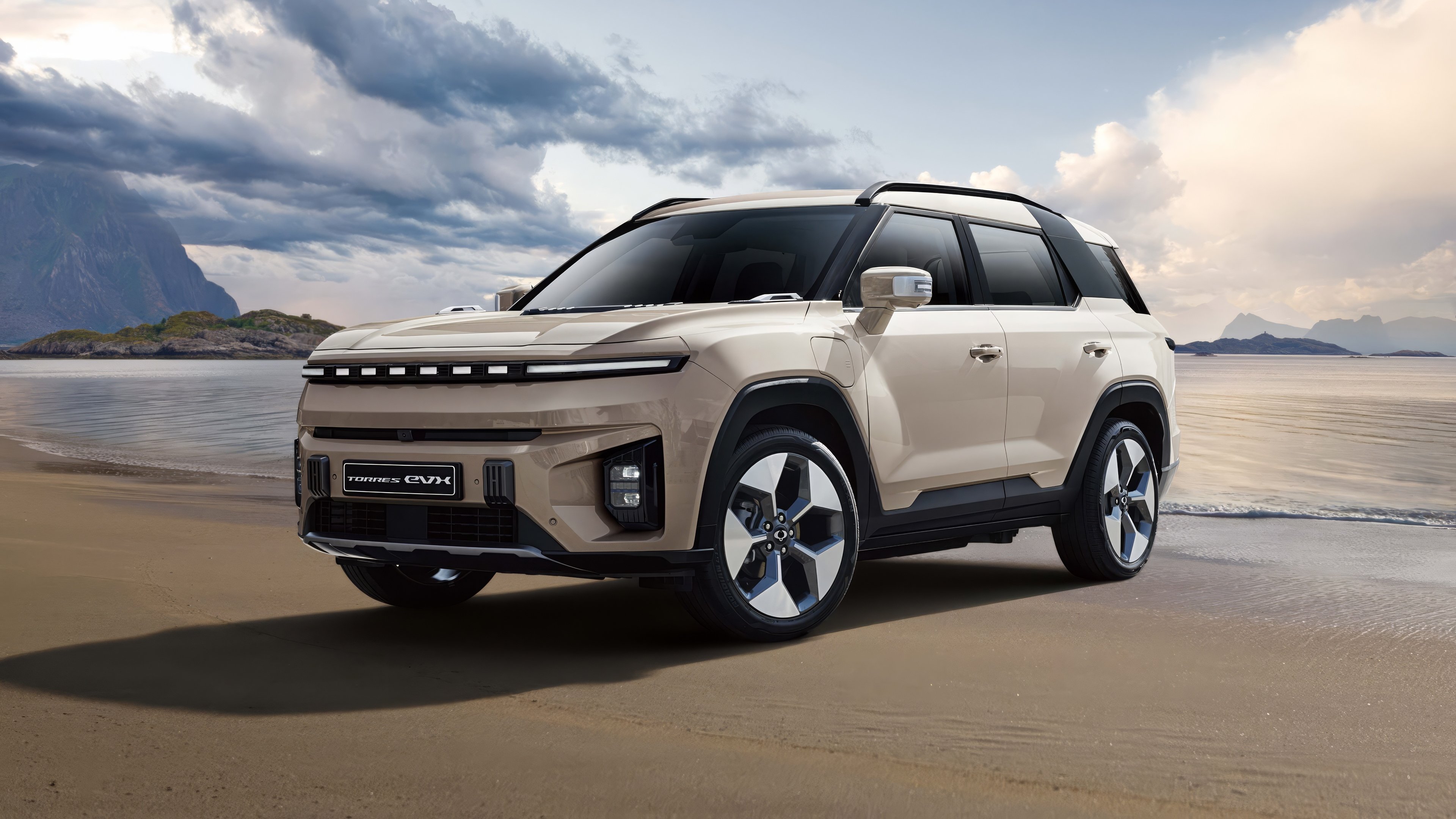
KGM is an EV brand owned by KG Mobility and made in South Korea. This model portfolio showcases the shift toward zero-emission mobility.
Vehicles are organized by model family. A model family is an OEM-defined product program sharing a common platform, architecture, and market positioning, from which multiple body styles, variants, and trims are derived.
KGM EV Model Families
List of KGM EV model families - only all-electric (BEV) models are listed:
| Canonical Model | Variants | Style |
|---|---|---|
| KGM Korando e-Motion | SUV | |
| KGM Torres EVX | SUV |
KGM EV Technology
Platform: Dedicated EV, 400VE/E Architecture: Baseline
OTA Capability: Baseline
Battery Suppliers: CATL, LG
Power Inverter Tech: IGBT-based
Platform = level of vehicle platform maturity or advancement, and its dominant system voltage.
Shared = ICE-derived | Dedicated = EV-native platform | SDV-Native = future-proof
E/E Architecture: degree of integration and maturity of the vehicle’s electronic/electric control systems (from Baseline legacy wiring to Advanced domain/zonal designs).
Baseline = Distributed ECUs | Modern = Domain-based | SDV-Native = Zonal-based with central compute
OTA Capability = scope of Over-The-Air updates supported — from Baseline basic infotainment to Advanced control and systems firmware.
Baseline = Infotainment/maps | Limited = Infotainment+ | Partial = Multiple systems | Advanced = Most systems | Full = Full-vehicle updateable
Battery Suppliers = primary traction battery suppliers across the model lineup.
Power Inverter Tech = power electronics technology used (silicon carbide SiC vs silicon), which affects efficiency and thermal performance.
IGBT = Conventional | SiC = High-efficiency | GaN = Next-generation, pilots
About KGM
KGM (formerly known as SsangYong Motor Company) is a South Korean automaker headquartered in Pyeongtaek, Gyeonggi Province. The company rebranded to KGM- short for Korea Global Motors- in 2023 following its acquisition by KG Group, a South Korean industrial conglomerate. This marked a major relaunch of the struggling SUV manufacturer, positioning it for a renewed focus on electrification, exports, and technology modernization under new ownership.
Historically known for rugged SUVs and utility vehicles such as the Rexton and Korando, the company has begun transitioning toward electrification through both hybrid and battery electric models. Its first full EV, the Korando e-Motion, was introduced in 2022 as an electric compact SUV derived from the existing Korando platform. The model features a single motor front wheel drive system producing around 140 kW and a 61.5 kWh battery supplied by LG Energy Solution, providing an estimated range of 340-360 kilometers (WLTP). It serves as KGM's initial step into the fully electric market, targeting mainstream affordability and export viability.
KGM's next generation of electric vehicles is being developed on a dedicated EV architecture known internally as the U100 platform, designed to support larger SUVs and pickup models. The first vehicle built on this platform, the Torres EVX, entered production in 2024 as a midsize electric SUV featuring a bold, rugged design, a 73.4 kWh LFP battery pack, and over 400 kilometers of range. The Torres EVX integrates a digital cockpit, twin-screen layout, and over-the-air software update capability, representing a technological leap forward for the brand.
Under KG Group, KGM aims to rebuild its global distribution network and reestablish its presence in Europe, the Middle East, and South America. Future plans include an electric pickup and additional SUVs leveraging the U100 platform, as well as potential collaboration with KG Mobility's battery and energy subsidiaries to secure long-term cell supply and charging solutions. The company is also investing in software and driver assistance technology as part of its modernization strategy.
Through the Korando e-Motion and Torres EVX, KGM has entered the early stages of electrification while retaining its heritage of durable, adventure ready vehicles. Its rebranding signifies a shift from survival to growth, with the company positioning itself as a globally oriented, technology driven Korean automaker focused on affordable, rugged, and sustainable mobility.
