EV Directory > Jaguar Portfolio
Jaguar EV Portfolio
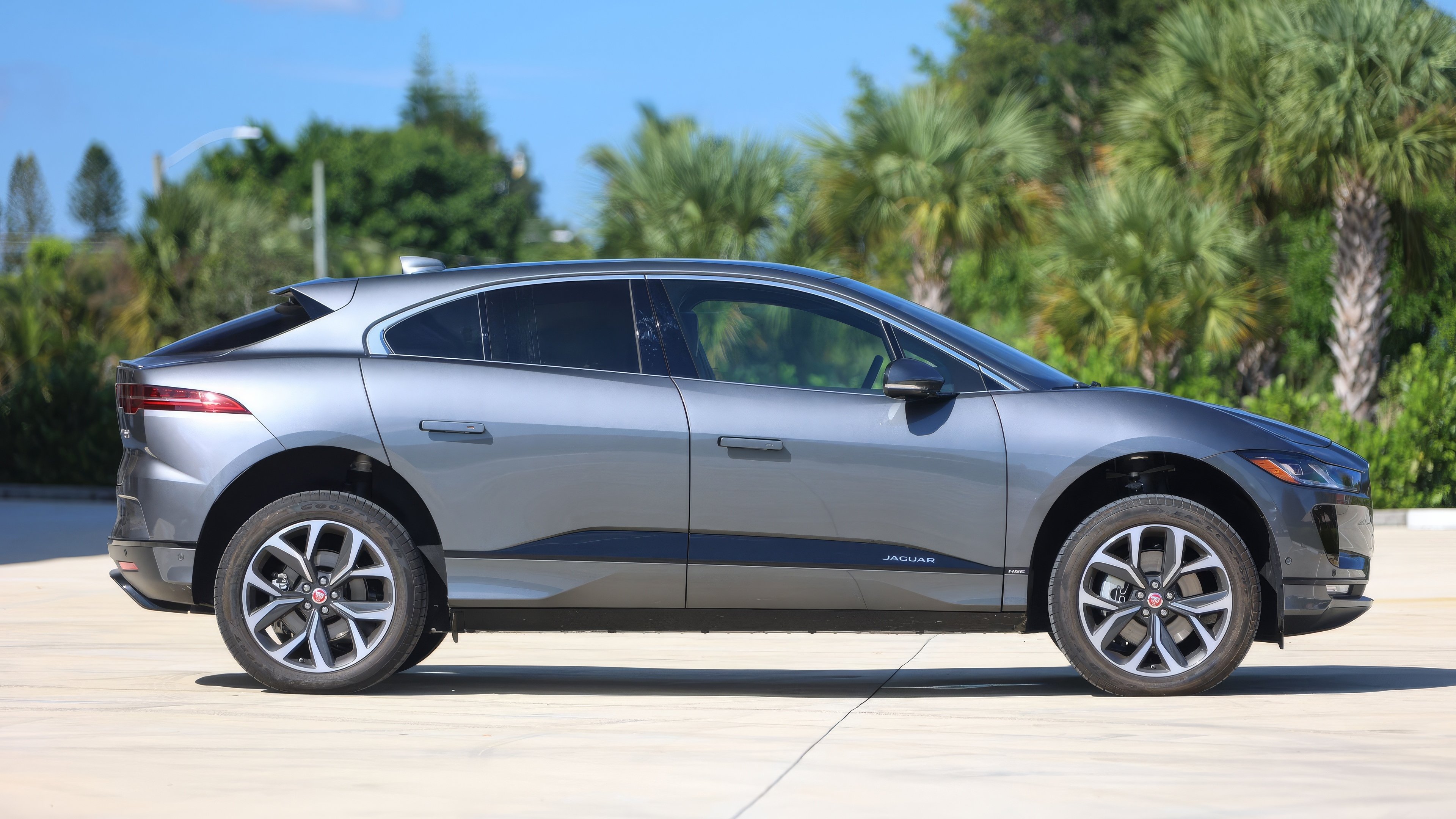
Jaguar is an EV brand owned by Waymo and made in UK. This model portfolio showcases the shift toward zero-emission mobility.
Vehicles are organized by model family. A model family is an OEM-defined product program sharing a common platform, architecture, and market positioning, from which multiple body styles, variants, and trims are derived.
Jaguar EV Model Families
List of Jaguar EV model families - only all-electric (BEV) models are listed:
| Canonical Model | Variants | Style |
|---|---|---|
| Jaguar I-PACE 400 | Robotaxi | SUV |
| Jaguar I-Type | SUV | |
| Jaguar Type 00 | coupe |
Jaguar EV Technology
Platform: Shared, 400VE/E Architecture: Baseline
OTA Capability: Baseline
Battery Suppliers: LG Chem, Tata
Power Inverter Tech: SiC-based
Platform = level of vehicle platform maturity or advancement, and its dominant system voltage.
Shared = ICE-derived | Dedicated = EV-native platform | SDV-Native = future-proof
E/E Architecture: degree of integration and maturity of the vehicle’s electronic/electric control systems (from Baseline legacy wiring to Advanced domain/zonal designs).
Baseline = Distributed ECUs | Modern = Domain-based | SDV-Native = Zonal-based with central compute
OTA Capability = scope of Over-The-Air updates supported — from Baseline basic infotainment to Advanced control and systems firmware.
Baseline = Infotainment/maps | Limited = Infotainment+ | Partial = Multiple systems | Advanced = Most systems | Full = Full-vehicle updateable
Battery Suppliers = primary traction battery suppliers across the model lineup.
Power Inverter Tech = power electronics technology used (silicon carbide SiC vs silicon), which affects efficiency and thermal performance.
IGBT = Conventional | SiC = High-efficiency | GaN = Next-generation, pilots
About Jaguar
Jaguar is a British luxury automobile manufacturer headquartered in Coventry, England, and part of Jaguar Land Rover (JLR), a subsidiary of Tata Motors. Founded in 1935, Jaguar built its reputation on design elegance, performance, and craftsmanship, producing icons such as the E-Type, XJ, and F-Type. In the modern era, Jaguar has faced significant challenges as it attempts to redefine its brand identity in the transition to electric mobility. The company is currently undergoing a major strategic overhaul as part of JLR's broader "Reimagine" electrification roadmap.
Under the Reimagine strategy announced in 2021, Jaguar was to undergo a radical pivot toward becoming an all-electric luxury brand by 2025. This plan included the development of an entirely new EV architecture known as JEA (Jaguar Electric Architecture) and the creation of a new design language distinct from its Land Rover sibling brands. The centerpiece of this transformation was a proposed halo vehicle internally referred to as the Jaguar Type 00- a futuristic grand tourer concept envisioned to symbolize Jaguar's electric rebirth. The Type 00 never progressed beyond the conceptual phase and served primarily as a design manifesto signaling Jaguar's future direction.
As of 2025, Jaguar's electric transition remains in flux amid restructuring and executive changes. Production of the I-PACE- Jaguar's first and only fully electric vehicle, launched in 2018- continues on a limited basis but will conclude as the company shifts to its new JEA platform. The I-PACE remains notable not only as Jaguar's EV pioneer but also as the foundation for Waymo's autonomous vehicle fleet in the United States, where it serves as the platform for Waymo's self-driving ride-hailing program. This collaboration underscores Jaguar's early contribution to the integration of electric and autonomous mobility.
The first of Jaguar's next generation electric vehicles, a high performance four door grand tourer, is now scheduled for release in 2026-2027. It will be built in Solihull, feature over 400 miles of range, and establish the brand's new design and performance benchmark. Future models are expected to include a luxury SUV and a four door coupe, each emphasizing exclusivity, sustainability, and digital craftsmanship.
Jaguar's current transformation aims to reposition the brand above the traditional luxury segment, competing with Bentley and Aston Martin through low volume, high value EVs. While the Type 00 concept represented an unfulfilled vision, its influence continues in the upcoming JEA based lineup. The success of this transition will determine whether Jaguar can reinvent itself as a modern, fully electric British luxury marque capable of competing at the highest levels of design and technology.
