EV Directory > Honda Portfolio
Honda EV Portfolio
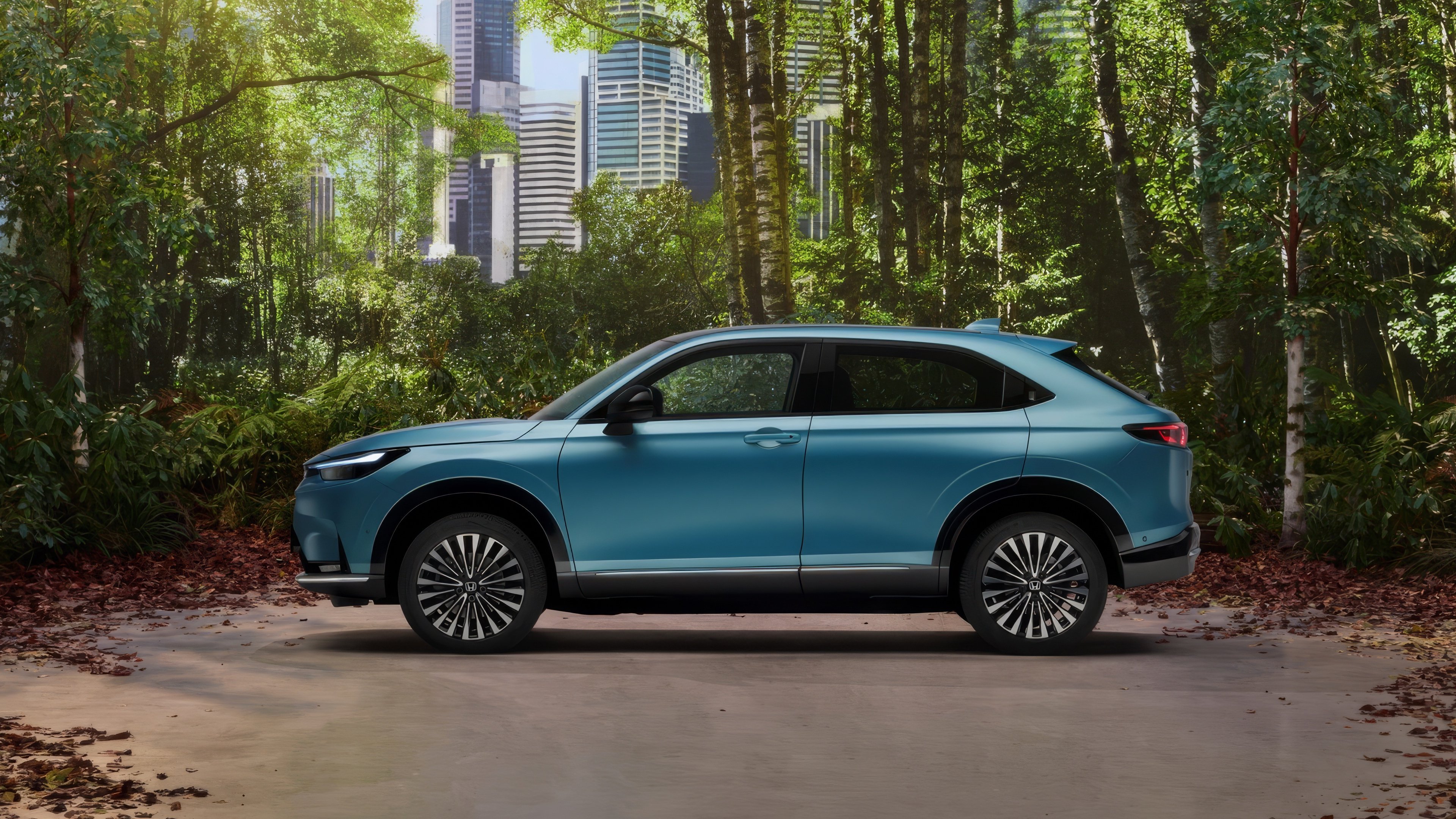
Honda is an EV brand owned by Honda Motor and made in Japan. This model portfolio showcases the shift toward zero-emission mobility.
Vehicles are organized by model family. A model family is an OEM-defined product program sharing a common platform, architecture, and market positioning, from which multiple body styles, variants, and trims are derived.
Honda EV Model Families
List of Honda EV model families - only all-electric (BEV) models are listed:
| Canonical Model | Variants | Style |
|---|---|---|
| Honda 0 Saloon | sedan | |
| Honda 0 SUV | SUV | |
| Honda Afeela 1 | sedan | |
| Honda e:Ny1 | SUV | |
| Honda N-Van e | MPV | |
| Honda Prologue | AWD | SUV |
| Honda Prologue | SUV | |
| Honda Ye P7 | SUV | |
| Honda Ye S7 | SUV |
Honda EV Technology
Platform: Dedicated EV, 400V-dominantE/E Architecture: Modern
OTA Capability: Baseline
Battery Suppliers: LG, CATL
Power Inverter Tech: IGBT-based
Platform = level of vehicle platform maturity or advancement, and its dominant system voltage.
Shared = ICE-derived | Dedicated = EV-native platform | SDV-Native = future-proof
E/E Architecture: degree of integration and maturity of the vehicle’s electronic/electric control systems (from Baseline legacy wiring to Advanced domain/zonal designs).
Baseline = Distributed ECUs | Modern = Domain-based | SDV-Native = Zonal-based with central compute
OTA Capability = scope of Over-The-Air updates supported — from Baseline basic infotainment to Advanced control and systems firmware.
Baseline = Infotainment/maps | Limited = Infotainment+ | Partial = Multiple systems | Advanced = Most systems | Full = Full-vehicle updateable
Battery Suppliers = primary traction battery suppliers across the model lineup.
Power Inverter Tech = power electronics technology used (silicon carbide SiC vs silicon), which affects efficiency and thermal performance.
IGBT = Conventional | SiC = High-efficiency | GaN = Next-generation, pilots
About Honda
Honda Motor Company is a Japanese multinational automaker headquartered in Tokyo, recognized for its engineering precision, reliability, and global scale across automobiles, motorcycles, and power equipment. Founded in 1948, Honda has built its reputation on efficiency and innovation, and is now undergoing a major transformation toward electrification, connectivity, and software defined mobility.
Honda's first mainstream battery electric vehicle for North America, the Honda Prologue, launched in 2024 and has become one of the brand's strongest performing new models. Co developed with General Motors, the Prologue is built on GM's Ultium electric platform and combines long range capability, DC fast charging, and modern digital interfaces. The midsize SUV represents Honda's first large scale step into the North American BEV market, offering up to 300 miles of range and seamless integration with the Google built in infotainment ecosystem. Its strong early sales have made it a key transitional product as Honda prepares its next generation of in house electric platforms.
Looking ahead, Honda's electrification roadmap is led by its new Honda 0 Series, a family of next generation EVs set to debut in 2026. The 0 Series emphasizes lightweight design, aerodynamic efficiency, and human centered simplicity, beginning with the Honda 0 Saloon and 0 Space Hub. These vehicles are being developed on Honda's dedicated EV architecture and will introduce new structural battery modules and advanced driver interaction systems optimized for global markets.
In parallel, Honda has partnered with Sony Group to launch the premium electric brand AFEELA, which blends Sony's strengths in sensors, AI, and digital entertainment with Honda's safety and manufacturing expertise. The AFEELA sedan, featuring over 40 sensors and immersive digital displays, is scheduled for North American production in 2026 and represents Honda's move into the software defined vehicle segment.
Honda continues to invest in solid state batteries, hydrogen fuel cell systems, and EV infrastructure through collaborations with GM and domestic Japanese partners. The company aims to achieve 100 percent zero emission vehicle sales globally by 2040. In the interim, hybrid models such as the CR V Hybrid, Accord Hybrid, and Civic e:HEV continue to anchor its transition strategy in key markets.
Through a combination of in house innovation, global alliances, and new sub brands such as 0 Series and AFEELA, Honda is redefining its role as a mobility technology company. Vehicles like the Prologue mark the first phase of this transformation, bridging the present with Honda's vision of fully electric, intelligent, and connected mobility for the next generation.
